
Government Sponsored Programs – Medicaid – State Rate Advocacy
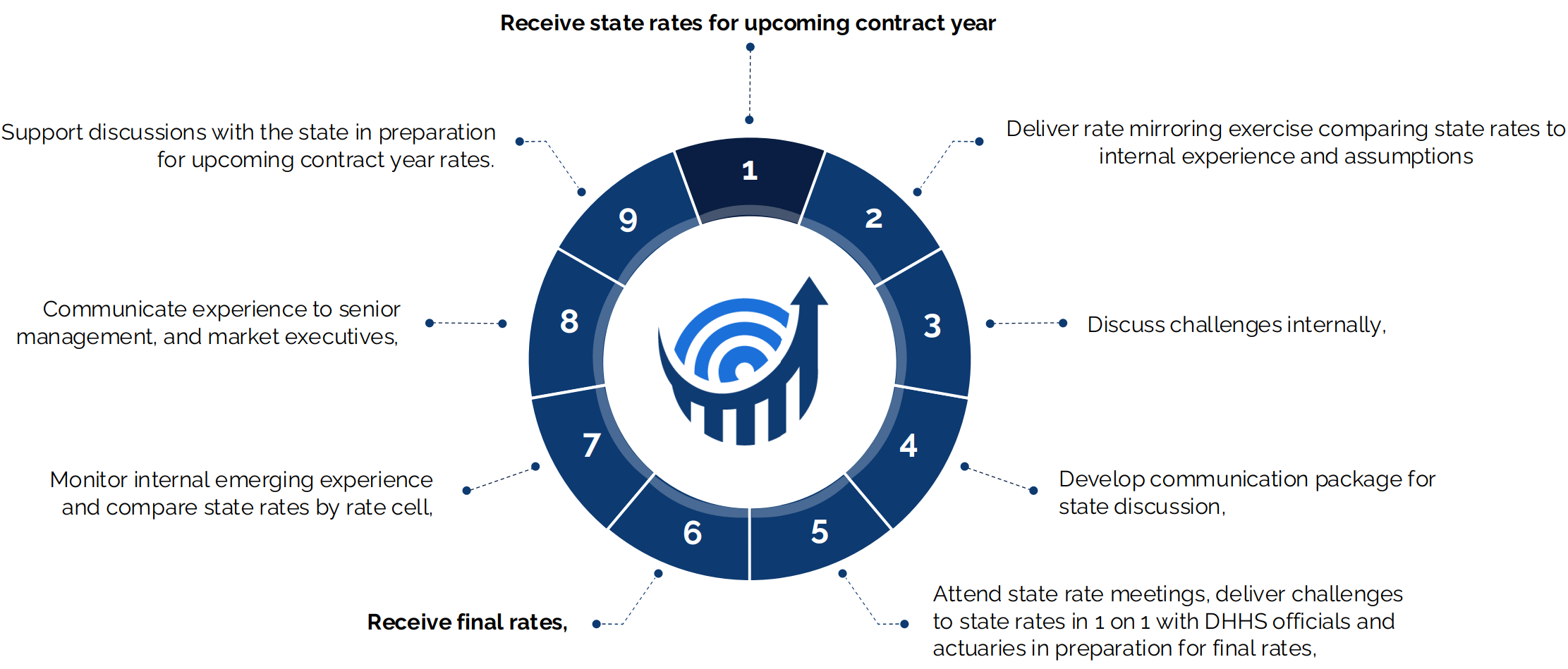
Government Sponsored Programs – Medicaid – State Rate Mirroring & Forecast Modeling
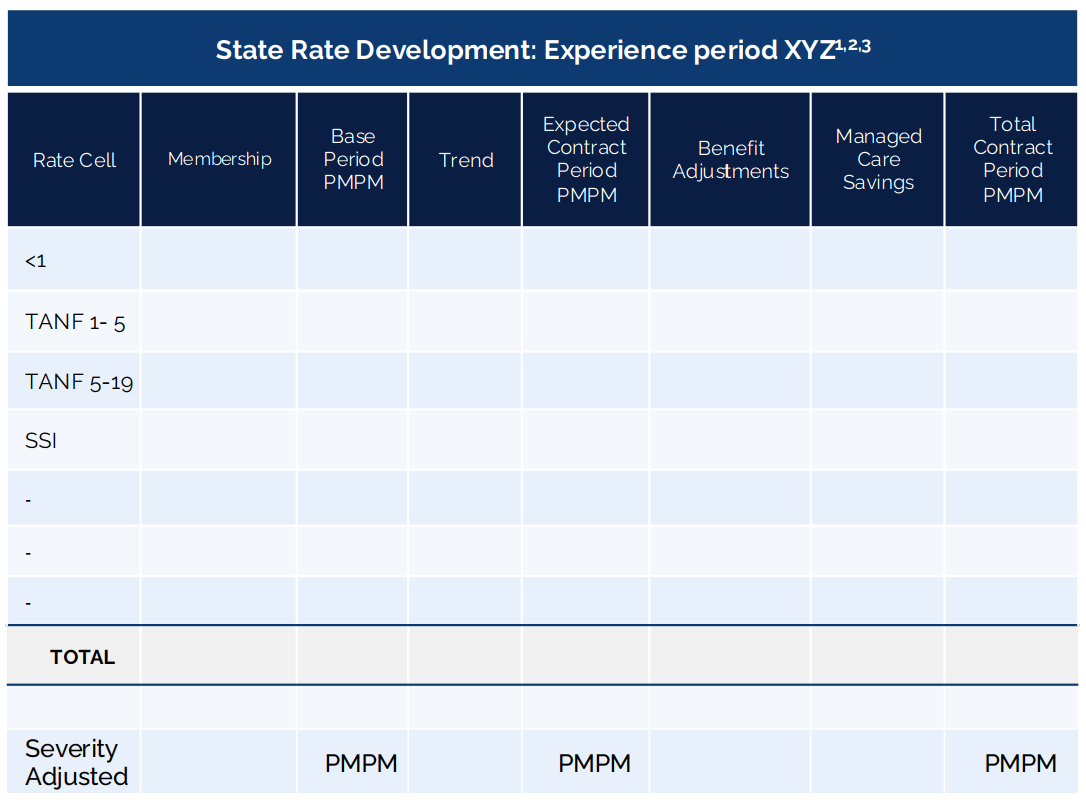
MCG will work closely with your actuarial team to develop models summarizing and capturing state rates for medical and retail pharmacy experience by service category , adjusted for program benefits, managed care savings and expected trend
❖ Models capturing base period experience used by the state will be compared to the client’s actual base period data adjusted for program benefits
» Both sets of data will include managed care adjustments, expected trend assumptions and program benefit adjustments taking the base period to the projected contract period
» This will be done by medical and pharmacy category and rate cells, allowing client to determine viability of state rates on client experience – PMPMs will be adjusted for plan factors and membership mix for state and clients actual membership distribution
» Allowing clients to develop internal cost management programs to achieve savings expected by the state
» We will capture actual emerging experience in contract period to gage performance against state rates giving clients the opportunity to share emerging costs with their respective DHS counterparts to inform contract rate development
Note:
1. State rate model replicated with plan experience and state assumptions, compared with plan experience and plan assumptions – providing direct comparison of rate viability and state performance expectations.
2. Model is further enhanced by developing similar comparisons by site of service and service categories
3. Model is leveraged to develop plans expected forecast/budget and compared with state rates, serving as a basis for cost ideation.